“Bean cultivation” search results (4000)

Chinese Coffee Bean Market Nestle Coffee Center stationed in Pu'er Industrial Park
After nearly 30 years of deep cultivation of Pu'er, the large-scale project of Nestle Coffee Center has recently officially entered the Pu'er Industrial Park. The center will greatly enhance its ability to provide training and technical support to farmers and coffee practitioners, and further improve and promote the development of Pu'er coffee industry. Representatives of Pu'er Industrial Park and Nestle Company jointly signed a cooperation agreement in Pu'er. Nestl é's pioneering role in Yunnan
2014-12-28 China Coffee beans Market Nestle Coffee Center residence Pu'er Industrial Park
Kenya Coffee Origin Ethiopia
Kenya is bordered to the north by Ethiopia, the origin of Arabica coffee trees, but it was not until the beginning of the 20th century that coffee cultivation began. In the 19th century, missionaries introduced Arabica trees from the leaves, but did not plant them in large quantities. It was not until 1893 that coffee was cultivated on a large scale because of the introduction of Brazil's ancient bourbon seeds. That is to say, Kenyan coffee is of Brazilian origin, because of water.
2016-06-14 Kenya coffee origin lichen Pia north neighbor rabbi original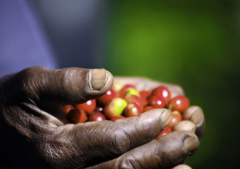
Nicaraguan honey treats red bourbon boutique coffee Jim Molina Manor
Introduction to Pacamara: Pacamara varieties are artificially cultivated varieties of Pacas and Maragogipe. It was first cultivated by researchers in El Salvador in 1958. Pacamara is an excellent variety under rare artificial breeding, which is better than blue, and perfectly inherits the advantages of the mother plant. It not only has the excellent taste of Pacas, but also inherits the big head of Maragogipe.
2016-06-15 Nicaragua processing Hongbo other species boutique single item coffee Jim Molly Zhuang
Introduction to the Flavor Grinding scale of the name of the Manor in the Coffee Bean planting area of Yunnan Province
According to Yunnan Coffee, in 1892, French missionary Father Tian used coffee fruit to breed the first coffee tree outside the church, and then cultivated more coffee trees and planted them around the church. Since then, the village of Zhukula began to grow coffee, and the village has been surrounded by coffee trees ever since. The two oldest elders in the village
2016-10-21 Yunnan coffee beans planting region name manor flavor taste grinding
Talk about the cultivation of coffee
Coffee (Coffee) is derived from the Latin word Coffea (biological word name) and belongs to a member of the Rubiaceae family. These plants are all woody plants, most of which are distributed in the tropics, with more than 500 classifications and about 6000 varieties.
2014-08-25 Coffee knowledge coffee cultivation coffee encyclopedia
Introduction of Coffee Bean Origin and Variety Coffee Bean species and comparison
The history of coffee cultivation in Colombia can be traced back to the Spanish colonial era in the 16th century, and there are many theories about the history of coffee in Colombia: one: it is said to come from the island of Haiti in the Caribbean and from El Salvador in Central America. Second: in 1808, a priest introduced coffee beans to Colombia for the first time from the French Antilles via Venezuela. One of them
2016-05-25 Coffee beans origin variety introduction type comparison Colombia cultivation coffee
Introduction to the Development History of cultivation and planting techniques for Coffee seedlings
Coffee planting technology introduces the origin of coffee trees in Ethiopia in Africa. In botany, coffee trees belong to the evergreen trees of the subgenus Rubiaceae, and coffee beans, commonly known as coffee beans, are the seeds of the fruit of coffee trees, just because they are shaped like beans, so they are called coffee beans. Climate is the decisive factor for coffee cultivation, and coffee trees are only suitable for growing in the tropics or subtropics.
2016-10-19 Coffee saplings how cultivation planting technology development history introduction coffee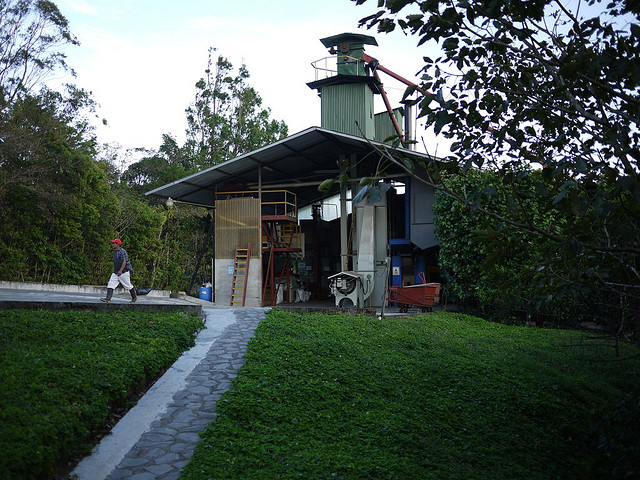
El Salvador Coffee Pacamara Pacamara El Ataisi Manor
Introduction to Pacamara: Pacamara varieties are artificially cultivated varieties of Pacas and Maragogipe. It was first cultivated by researchers in El Salvador in 1958. Pacamara is an excellent variety under rare artificial breeding, which is better than blue, and perfectly inherits the advantages of the mother plant. It not only has the excellent taste of Pacas, but also inherits the big head of Maragogipe.
2016-03-25 El Salvador coffee Pacamara Parka Mara Ataisi
The characteristics and taste of Hawaiian Coffee the cultivation and production of Hawaiian Coffee
To visit Hawaii, in addition to the beautiful beach, don't forget the Hawaiian coffee bean-Kona. The taste is sweet with the sour taste of wine, which is very special. The most traditional and famous coffee in Hawaii. However, due to the low production here, the surprisingly high cost, and the increasing demand for individual coffee in the United States and other places, its unit price is not only getting higher and higher, but also
2016-03-02 Hawaii Kona coffee characteristics taste cultivation as well as production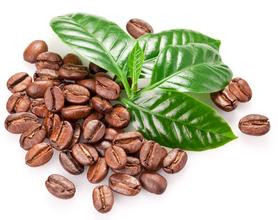
Boutique coffee beans: coffee genealogy (variety knowledge popularization post) basic knowledge of coffee introduction
From Ethiopia to East Africa, coffee varieties have experienced about 1300 years of development and evolution. Experienced Yemen, India, Java, the Netherlands, Paris, Bourbon, Martinique Island, Haiti, Mexico, Brazil and other Central and South American countries. Coffee is an evergreen shrub of the genus Rubiaceae of Gentianaceae. The general classification of coffee is: Arabica iron.
2015-12-02 Boutique coffee beans coffee genealogy variety knowledge popularization introduction basic knowledge
Vietnamese coffee bean flavor taste manor production area introduces Vietnamese coffee bean brand
Coffee cultivation in Vietnam covers an area of about 500000 hectares, of which 10% are owned by state-owned enterprises and farms, and 85% by farmers and landowners. The scale of the manor is small, usually 2-5 hectares, and the large manor is about 30-50 hectares, but the number is small. Vietnamese coffee ranks second in all agricultural products exported from Vietnam, second only to rice. Every year, about 300000 farmers are engaged in coffee cultivation, with a labor force of 600000.
2016-07-21 Vietnam coffee beans flavor taste manor producing area introduction brand
Basic knowledge about coffee
What is coffee? Coffee is the fruit of a Rubiaceae plant grown at altitudes of about 6,000 feet and distributed along narrow subtropical axes around the world; the coffee tree is green all year round and can grow up to 20 feet tall, usually controlled to 8 to 10 feet tall for easy harvesting.
2014-09-02 Coffee knowledge coffee basics coffee knowledge coffee encyclopedia
Basic knowledge of coffee growing
What is coffee? Coffee is the fruit of a Rubiaceae plant grown at altitudes of about 6,000 feet and distributed along narrow subtropical axes around the world; the coffee tree is green all year round and can grow up to 20 feet tall, usually controlled to 8 to 10 feet tall for easy harvesting.
2014-06-17 Coffee knowledge coffee growing coffee encyclopedia
Coffee bean grade classification what kinds of coffee beans are there? taste classification table of coffee beans
The Arabica coffee tree, which originated in Ethiopia, accounts for 70% of the world's output of coffee beans; the world-famous Blue Mountain Coffee and Mocha Coffee are almost all Arabica species. The coffee trees planted in Arabica are suitable for growing in high mountains with large temperature difference between day and night, as well as soils with low humidity and good drainage; the ideal altitude is 500m ~ 2000 m, and the higher the altitude is, the better the quality is.
2016-05-24 Coffee beans grades classification which species taste origin Ethiopia la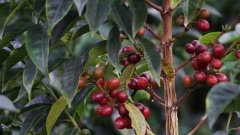
El Salvador boutique coffee flavor El Salvador coffee manor introduction
Introduction to Pacamara: Pacamara varieties are artificially cultivated varieties of Pacas and Maragogipe. It was first cultivated by researchers in El Salvador in 1958. Pacamara is an excellent variety under rare artificial breeding, which is better than blue, and perfectly inherits the advantages of the mother plant. It not only has the excellent taste of Pacas, but also inherits the big head of Maragogipe.
2016-05-08 El Salvador boutique coffee flavor manor introduction Pacamara Jane
Coffee Bean Type Introduction Gene Mutant
From left to right: Kenyan round beans, elephant beans, Kenyan AA pointy Bourbon (Bourbon Pointu): Found on Bourbon Island in 1810, the bean body has changed from round to pointy, and the caffeine content is only half; however, the quantity is small and weak, and it is extremely precious (mostly cultivated in the laboratory). Maragogype (or Elephant Bean): The best-known variety of tibeka bean, first developed in northeastern Brazil in 1870.
2015-03-27 boutique coffee bean species description gene mutant
El Ataisi Coffee Manor introduces El Pacamara boutique coffee El Salvador
Introduction to Pacamara: Pacamara varieties are artificially cultivated varieties of Pacas and Maragogipe. It was first cultivated by researchers in El Salvador in 1958. Pacamara is an excellent variety under rare artificial breeding, which is better than blue, and perfectly inherits the advantages of the mother plant. It not only has the excellent taste of Pacas, but also inherits the big head of Maragogipe.
2016-03-30 El Salvador Ataisi Coffee Manor introduction Parka Mara boutique
What conditions do you need to grow coffee trees?
The planting conditions of coffee trees the origin of coffee trees is in Ethiopia, Africa. In botany, coffee trees belong to the evergreen trees of the subgenus Rubiaceae, and coffee beans, commonly known as coffee beans, are the seeds of the fruit of coffee trees, just because they are shaped like beans, so they are called coffee beans. Climate is the decisive factor for coffee cultivation, and coffee trees are only suitable for growing in the tropics or subtropics.
2016-06-13 Coffee cultivation needs what conditions coffee origin Africa
Talking about Coffee beans
1. Summary: coffee is a perennial evergreen shrub or small tree of Rubiaceae. It is native to tropical Africa and has been cultivated for more than 2000 years. The Arabs began to grow coffee in 525 BC, and it was popular for Arabs to stir-fry coffee beans. They began to grow coffee beans on a large scale after the 15th century, and were widely distributed in the tropics and subtropics of Europe, Asia, Africa and Latin America after the 18th century.
2014-07-02 Coffee beans coffee bean history coffee bean uses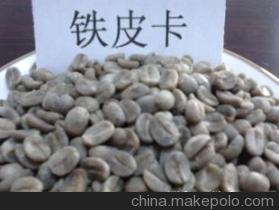
Introduction of Coffee varieties Typica is smaller than the old variety of Tiebika
Typica (Typica) is the species name of coffee beans, and it is one of the oldest varieties of Arabica. Iron pickup, also known as the old variety of small-grain coffee, its yield is less, cultivation is difficult, so the price is much higher than ordinary small-grain coffee. Tibica coffee is native to Ethiopia.
2016-03-01 Coffee planted introduced Tiebi Typica Tippi pickup variety